Description
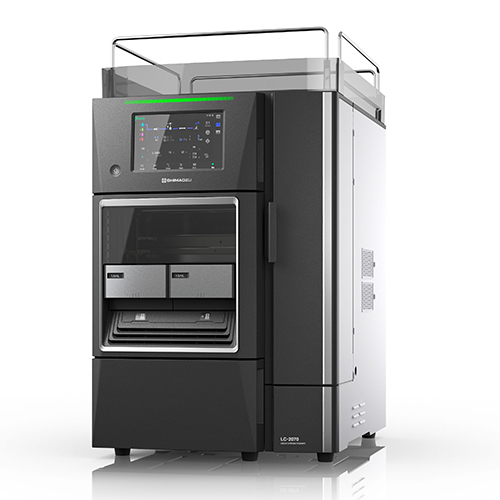
HIGH PERFORMANCE LIQUID CHROMATOGRAPHY (HPLC) & ULTRA HIGH PERFORMANCE LIQUID CHROMATOGRAPHY (UHPLC) SYSTEMS
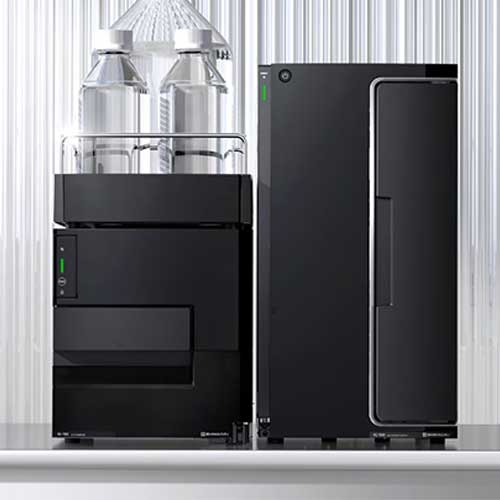
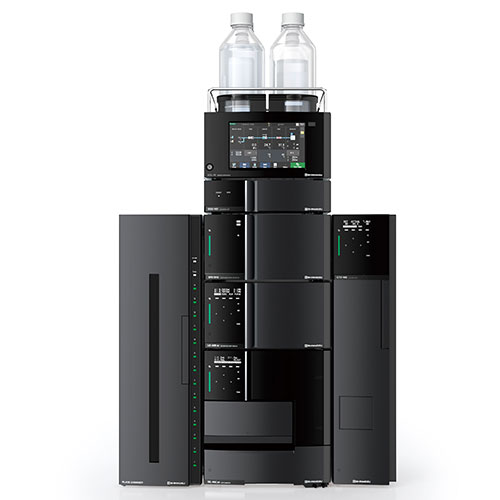
Shimadzu HPLC and UHPLC systems are designed to deliver high-resolution separations, reproducible results, and intelligent automation, supporting both routine and advanced analytical workflows across industries.
Shimadzu offers two primary HPLC/UHPLC architectures to suit different laboratory needs:
Nexera Series – Modular HPLC/UHPLC Systems
The Nexera Series is Shimadzu’s flagship modular platform, designed for maximum flexibility, ultra-high performance, and scalability.
- Pressure Range: Available configurations support 44 MPa, 70 MPa, 105 MPa, and up to 130 MPa, enabling everything from conventional HPLC to high-speed UHPLC separations.
- Modular Design: Independent selection of pumps, autosamplers, detectors, and column ovens
- High Throughput Capability: Optimized for fast gradients and short run times
i-Series – Integrated HPLC Systems
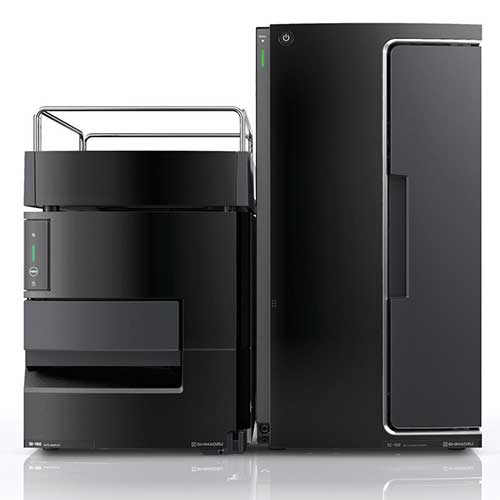
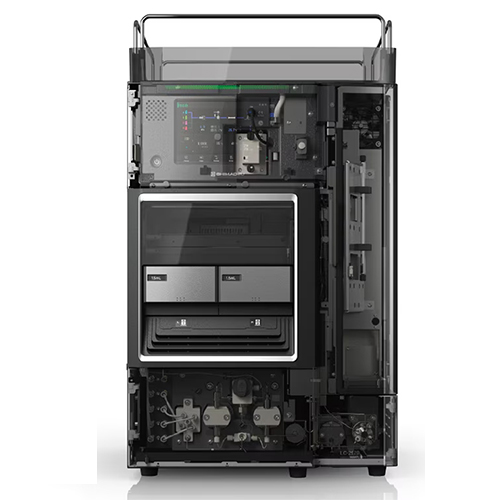
The i-Series combines all core HPLC components into a compact, all-in-one system, prioritizing ease of use and automation.
- Pressure Range: Typically 50–70 MPa, suitable for routine HPLC and moderate UHPLC applications
- Compact Footprint: Ideal for space-constrained labs
- Simplified Operation: Pre-configured and easy to deploy
Core Characteristics & Performance
- High Resolution & Separation Efficiency – supports complex mixtures and closely related compounds
- Excellent Retention Time and Area Reproducibility – critical for quantitative analysis
- Wide Pressure Capability – enables use of sub-2 µm columns for UHPLC performance
- Low Carryover Autosamplers – ensures sample integrity across runs
- Gradient Precision & Mixing Accuracy – consistent solvent delivery for reliable results
- Inert Flow Path Options – minimizes interaction with sensitive analytes
Smart AI Features & Automation
Shimadzu integrates Analytical Intelligence across HPLC/UHPLC platforms to enhance system reliability and reduce operator workload:
- Self-Diagnostics & Auto-Recovery – detects issues such as air bubbles, leaks, or flow inconsistencies and corrects them automatically
- FlowPilot Technology – controlled flow ramping to extend column life and prevent pressure shocks
- Pump & System Monitoring – continuous tracking of performance parameters
- Autosampler Intelligence – clog detection and injection accuracy verification
- Remote Monitoring & IoT Connectivity – enables system control and diagnostics from remote locations
- Automated Startup/Shutdown – reduces manual intervention and improves consistency
Operational Advantages
- Reduced Downtime through predictive maintenance and automated recovery
- Improved Data Quality via stable flow, pressure, and temperature control
- High Throughput with fast cycle times and automation
- Scalable Configuration from routine QC to advanced R&D applications
- User-Friendly Operation for both expert and non-expert users
Industries Served
Shimadzu HPLC/UHPLC systems are widely applied across:
- Pharmaceutical – drug development, impurity profiling, stability testing
- Food & Beverage – additives, contaminants, and nutritional analysis
- Water & Environment – water quality testing, pesticide and pollutant analysis
- Clinical & Life Sciences – metabolomics, biomarker analysis

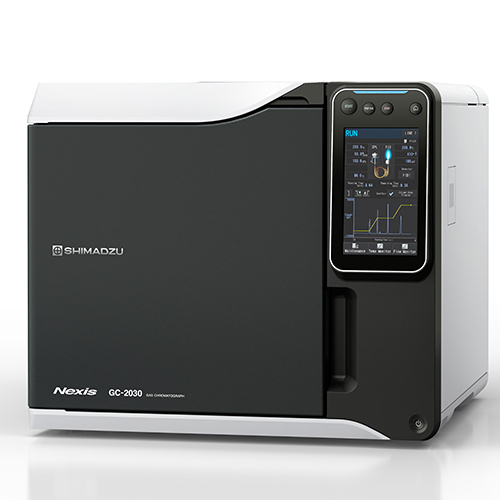
GC 2030

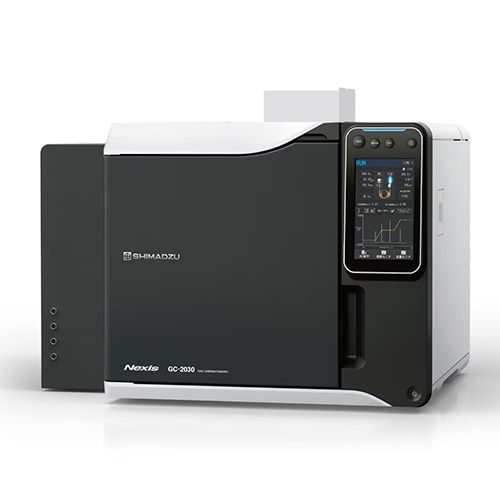
Brevis GC 2050
GAS CHROMATOGRAPHY (GC) SYSTEMS
Stability, Speed, Smart Control
Shimadzu gas chromatography (GC) systems are engineered for high reproducibility, precise separation, and long-term operational stability, making them a cornerstone for routine and advanced analytical workflows.
Shimadzu offers a versatile GC lineup designed to balance performance, footprint, and scalability:
- Nexis GC-2030 – flagship gas chromatograph delivering high sensitivity, reproducibility, and advanced automation
- Brevis GC-2050 – compact, high-performance GC system optimized for space efficiency and routine analysis
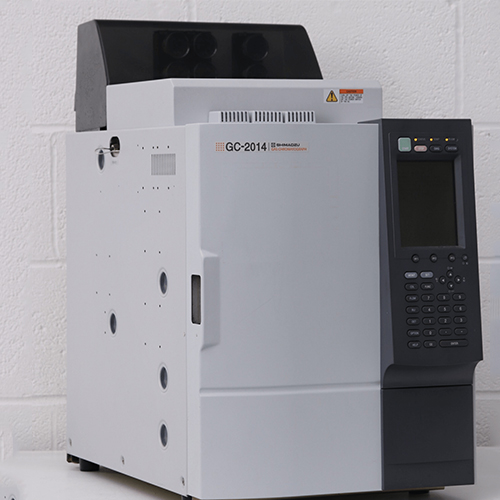
- GC-2010 Pro / GC-2014 – robust, high-throughput GC system for demanding routine and industrial applications
These systems support a wide range of detectors (FID, TCD, ECD, FPD) and injection techniques, enabling adaptation across diverse analytical requirements.
Core Characteristics & Performance
- High Retention Time Reproducibility – critical for consistent compound identification
- Thermal Stability & Precise Oven Control – ensures accurate separation of volatile compounds
- Fast Heating & Cooling Cycles – improves sample throughput and reduces analysis time
- Wide Dynamic Range Detection – supports both trace-level and high-concentration analysis
- Flexible Configuration – multi-detector and multi-injection setups
Smart Features & Automation
Shimadzu integrates Analytical Intelligence into GC systems to enhance reliability and reduce manual intervention:
- Self-Diagnostics & Predictive Monitoring – identifies leaks, flow issues, or detector instability
- ECO Idling Function – automatically reduces gas and power consumption during idle periods
- Automated Gas Flow Control – ensures consistent carrier gas delivery and pressure stability
- Tool-Free Maintenance Design – simplifies liner, column, and detector servicing
- Autosampler Integration – improves reproducibility and enables unattended operation
Industries Served
Shimadzu GC systems are widely used across:
- Pharmaceutical – residual solvent analysis, impurity profiling
- Petroleum & Petrochemicals – hydrocarbon composition, fuel quality testing
- Water & Environment – VOCs, air and water pollutant monitoring
- Food & Beverage – flavor profiling, contaminant detection
- Forensics & Toxicology – drug screening, chemical identification

System GC

System GC

System GC
SYSTEM GC
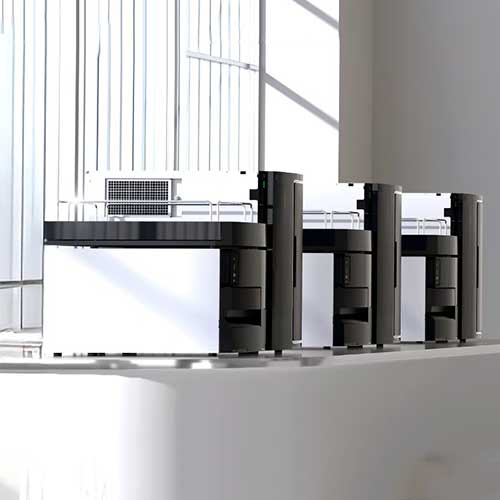
The Shimadzu System GC is an advanced, application-specific gas chromatography solution engineered for the comprehensive analysis of hydrocarbon streams in industries such as oil and gas, petrochemicals, and energy production. Unlike a conventional gas chromatograph, which requires users to configure methods, columns, and operating conditions, a System GC is delivered as a fully integrated and pre-validated platform that combines optimized hardware, dedicated flow path design, multi-column configurations, switching valves, and appropriate detectors—typically flame ionization detectors (FID) and thermal conductivity detectors (TCD)—with specialized software for automated control and data processing. These systems are designed to accurately separate, identify, and quantify individual hydrocarbon components ranging from light gases such as methane to heavier fractions, depending on the specific application, while also calculating critical physical and energy-related properties including calorific value, relative density, and Wobbe index.
System GC platforms are purpose-built to perform standardized analytical tests and are configured in accordance with internationally recognized methods to ensure consistency, accuracy, and regulatory compliance. Commonly supported standards include ASTM D1945 for determining the composition of natural gas and similar mixtures, ASTM D3588 for calculating calorific properties, and GPA 2261 for extended gas analysis. For more complex hydrocarbon characterization, systems may also comply with methods such as ASTM D6729 for PIONA-type analysis and ASTM D7169 for determining boiling range distributions of petroleum products. By integrating these validated methodologies into a single platform, System GC solutions eliminate the need for extensive method development, reduce operator dependency, and enhance analytical reproducibility.
The System GC serves as a complete analytical solution rather than just an instrument, enabling laboratories and industrial facilities to perform reliable hydrocarbon testing for applications such as natural gas quality assessment, refinery gas monitoring, liquefied petroleum gas analysis, and fuel characterization. Its combination of precision engineering, standardized operation, and automated data interpretation makes it an essential tool for quality control, process optimization, regulatory reporting, and custody transfer measurements in hydrocarbon processing environments.

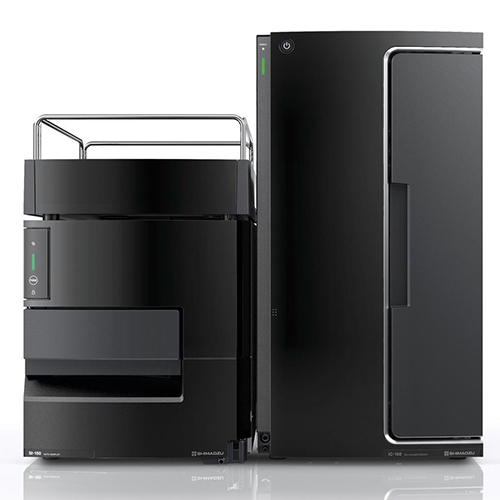
Nexera IC

Nexera IC

Nexera IC
ION CHROMATOGRAPHY SYSTEMS
Ion Chromatography (IC) systems, such as the Prominence and Nexera IC platforms, are engineered for high-precision separation and quantification of anions and cations using conductivity detection with optional suppression. These systems typically operate at pressures up to 20 MPa (≈2900 psi) with low-pulsation, metal-free pumps delivering flow rates up to 10 mL/min, ensuring stable baselines and reproducible retention times. They support flexible injection volumes ranging from 0.1 µL to 2000 µL, with high-speed autosamplers capable of handling up to 175 samples, making them suitable for high-throughput laboratories. Temperature-controlled column ovens (up to 85 °C) and conductivity detectors with low cell volume (~0.25 µL) enhance sensitivity and resolution, while compliance with methods such as EPA 300/300.1 demonstrates suitability for trace-level environmental analysis.
Key features include advanced electrodialytic suppressor technology (e.g., ICDS-40A), which operates without chemical regenerants, reducing maintenance while improving signal-to-noise ratio and detection limits. The systems are designed with low internal volume flow paths to minimize peak dispersion, dual thermal regulation for detector stability, and inert flow components to prevent contamination. Additional capabilities include automated sample dilution, intelligent workflow control, and seamless integration with LabSolutions software for data acquisition and compliance reporting. Shimadzu IC platforms also offer modular configurations for anion and cation analysis (including dual setups), compatibility with a wide range of IC columns (e.g., Shim-pack series), and compact footprints (~420 mm width) to optimize laboratory space, making them robust, scalable, and efficient solutions for modern analytical laboratories.


Reviews
There are no reviews yet.