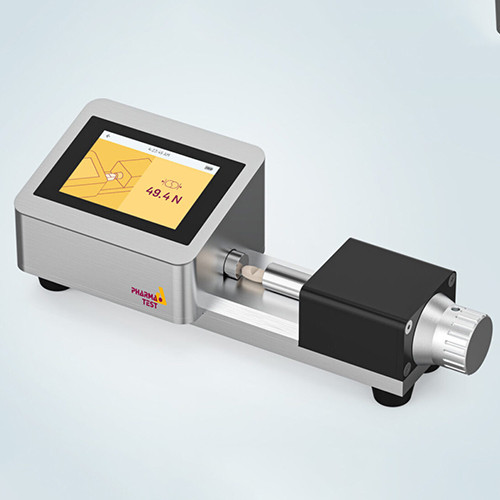

Pharmaceutical Physical Testing

Free

Order Via Whatsapp

Pharmaceutical physical testing systems are essential quality control instruments used to evaluate the mechanical strength, structural integrity, and dissolution behaviour of solid dosage forms. These tests ensure that tablets and capsules meet pharmacopeial requirements (USP, Ph. Eur., IP) for safety, efficacy, and consistent drug release performance. The four core analytical methods—dissolution, disintegration, friability, and hardness testing—form the foundation of routine solid dosage form quality assurance in pharmaceutical manufacturing and laboratory environments.

Description

Dissolution Testing

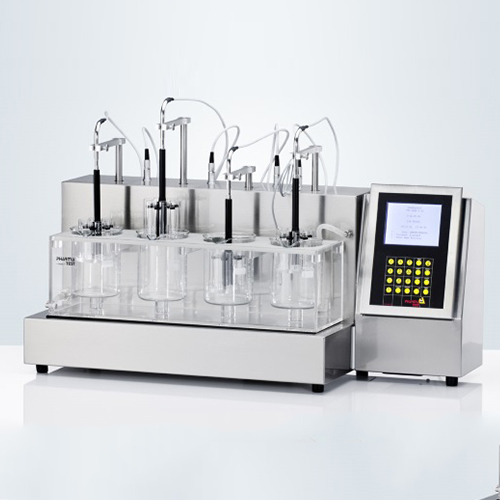
Dissolution testing systems are used to determine the rate and extent at which active pharmaceutical ingredients are released from solid dosage forms into a dissolution medium. This process is critical for bioavailability assessment and regulatory compliance.

Modern dissolution testers support both USP Apparatus 1 (basket) and Apparatus 2 (paddle) configurations, with additional options for extended pharmacopeial methods. Systems typically feature:

  • 6 to 8 vessel configurations for parallel testing
  • Automated sampling with programmable intervals
  • Temperature control at 0 ± 0.5 °C
  • Speed range typically 25–250 rpm
  • Integrated heating bath or dry heating system
  • Independent stirring for each vessel in advanced configurations
  • Data logging with full audit trail support (21 CFR Part 11 compatible systems available)

High-end systems also support automated media filling, online UV analysis integration, and programmable test methods for repeatability in QC and R&D environments.


Disintegration Testing

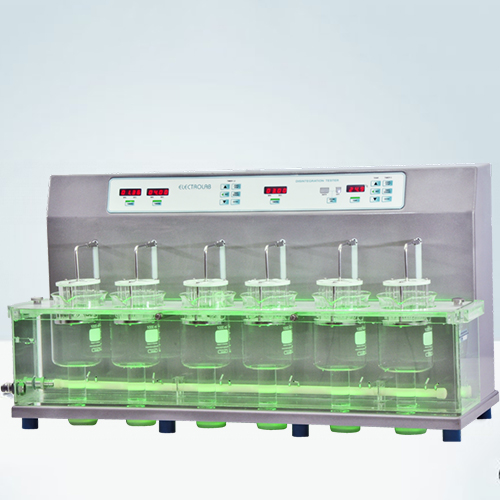
Disintegration testing determines the time required for tablets or capsules to break down into particles under specified conditions, simulating physiological environments.

Typical system characteristics include:

  • 1 to 3 basket configurations for parallel testing
  • Standard stroke rate: 30 cycles/minute (±1)
  • Stroke length: approximately 55 mm
  • Temperature control at 0 ± 2 °C
  • Timer-controlled or automated endpoint detection
  • Programmable test methods for different pharmacopeial standards
  • Transparent beaker systems for visual monitoring

Advanced systems may include automated basket lift mechanisms, real-time temperature monitoring, and digital reporting for GLP-compliant documentation.

Friability Testing

Friability testing evaluates the tendency of tablets to crumble or break under mechanical stress during handling, packaging, and transport.

Standard system specifications include:

  • Drum rotation speed: 25 rpm (±1 rpm)
  • Fixed rotation count: typically 100 revolutions per test cycle
  • Drum incline angle: 25°
  • Tablet weight measurement accuracy: high-resolution analytical balance integration
  • Dual-drum or single-drum configurations depending on throughput requirements
  • Automated pre- and post-weighing workflows in advanced systems

Some systems include electronic balancing integration, automatic sample dust removal, and programmable test cycles for batch consistency.


Hardness Testing

Hardness testing systems measure the breaking force required to crush tablets, ensuring mechanical stability during packaging, transport, and handling.

Core technical features include:

  • Measurement range typically up to 500–800 N depending on model configuration
  • Accuracy resolution as fine as 1 N
  • Automatic and manual loading modes
  • Digital force sensors with high repeatability
  • Compression speed control for consistent test conditions
  • Single and multi-tablet testing capability
  • USB / network data export for LIMS integration

Advanced systems may include automatic tablet orientation, multi-sample testing sequences, and statistical evaluation tools for batch analysis.


Get a quote or product inquiry

Email us at sales@esteckenya.com